In Black and Latino communities across the US, rates of PrEP use are low compared to rates of HIV diagnoses†:
†Source: CDC, 2023.
Only 14% of PrEP users in 2023 were Black,
even though Black people made up
39% of new HIV cases in the prior year.
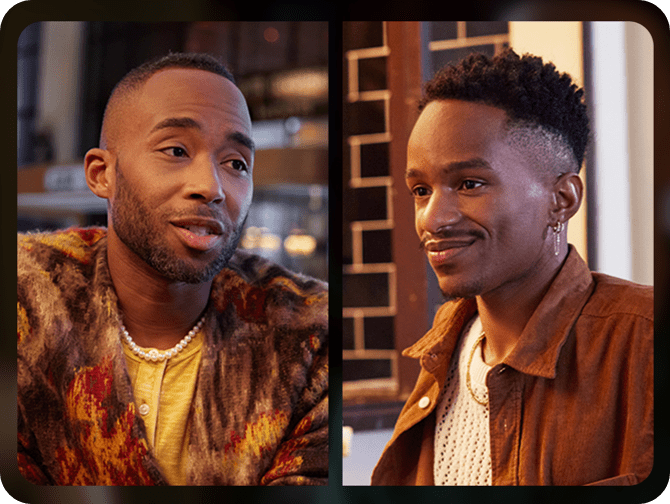
Hear real PrEP users talk about PrEP in the Black community
Hear real PrEP users talk about PrEP in the Black community
TEXT ON-SCREEN:
REAL CONVERSATIONS: PrEP IN THE BLACK COMMUNITY
PrEP users compensated by Gilead.
TEXT ON-SCREEN:
LAMONT
PrEP user since 2020
EVERETT
PrEP user since 2019
LAMONT:
Last time we spoke, you mentioned that there was, between your Black and white friends, they had different views if PrEP was for them. Do you still feel that same way?
EVERETT:
Yeah. I think it rolled out differently in the Black gay community. I definitely got funny looks from some of my Black gay friends who didn’t seem to be educated about PrEP medications early on.
Since then, things have seemed to changed a bit. From what I’ve seen, some people in my Black community in Atlanta have started to be more informed about PrEP, which I think has helped to drive some of those changes in the perceptions of it. I think it helps having people they can relate to, like us, sharing our stories.
The more they can see someone who is similar to them associated with PrEP and HIV prevention, the more they can start to change perceptions and stigma around PrEP.
What do you think? Do you think there’s still a lot of stigma? I mean, what do we do about that part?
LAMONT:
Yes. I think…there’s a lot of stigma. I’ve heard people say that PrEP is for people who want multiple partners, which in my opinion, isn’t true. People need to educate themselves on their options.
EVERETT:
Yes. Knowledge is power.
LAMONT:
Absolutely. So, what’s your opinion, what do you think about stigma? What can we do about it?
EVERETT:
There’s this idea that taking medicine is hard, and I hear a lot of people like, oh I don’t want to do that. Or I’ve certainly heard some of my Black friends say, oh I don’t know if that’s for me.
LAMONT:
I do believe that there is a lack of knowledge on that subject.
I think healthcare providers, they can build more rapport with their patients, you know, to help create that safe space for them to talk about their sexual health.
EVERETT:
Yeah, yeah, like creating that moment, safe space, and that time to like ask some questions, like feel like you can talk about sex. It’s not always the most comfortable thing, right?
LAMONT:
I agree with what you’re saying.
I actually spoke to my healthcare provider—they didn’t know anything about PrEP.
EVERETT:
So you like, educated him and then he learned about it.
LAMONT:
Yes.
EVERETT:
I definitely think that sometimes talking to a healthcare provider about HIV and sex can be a barrier itself because sometimes, you know, you get those like disparaging looks or those questions, right, about why are you having multiple sex partners or why do you even need PrEP? Why are you asking me that, right? It’s just those looks and those moments that we kind of, like we read them so intensely from physicians and they often think it’s just a question or it’s just like a check-mark asking you about your sexual behavior. But it turns you off. Like, right? You're just like, okay, maybe I'm out. I'm not going to ask about PrEP anymore, right?
LAMONT:
That's why most Black people rather not ask questions.
These are people, and they deserve to be able to come to a place and feel safe to talk about things and be able to get that knowledge regardless of race, sexuality, or anything like that.
EVERETT:
And like more policies in that space to where physicians just get to automatically ask, are they interested in PrEP? You know, sort of, maybe removing some of those potentially judgmental questions.
TEXT ON-SCREEN:
Talk to a healthcare provider to see if PrEP may be an option for you.
EVERETT:
That’s something I always think we can do to kind of change it and like just push us forward a bit more.
TEXT ON-SCREEN:
Talk to a healthcare provider to see if PrEP may be an option for you.
LAMONT:
Absolutely.
TEXT ON-SCREEN:
[GILEAD logo]
GILEAD and the GILEAD Logo are trademarks of Gilead Sciences, Inc., or its related companies. ©2025 Gilead Sciences, Inc. All rights reserved. US-DVYC-0234 02/25
Only 18% of PrEP users in 2023 were Latino,
even though Latino people made up
31% of new HIV cases in the prior year.
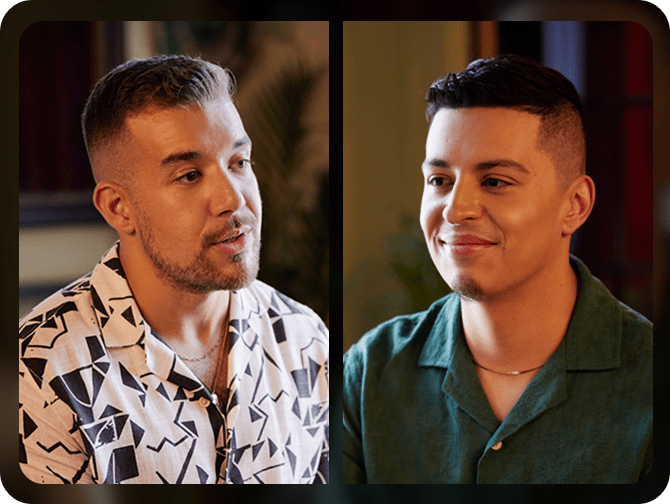
Hear real PrEP users talk about PrEP in the Latino community
Hear real PrEP users talk about PrEP in the Latino community
TEXT ON-SCREEN:
REAL CONVERSATIONS: PrEP IN THE LATINO COMMUNITY
PrEP users compensated by Gilead.
TEXT ON-SCREEN:
KEVIN
PrEP user since 2020
SERGIO
PrEP user since 2020
SERGIO:
I think there’s a low uptake of…PrEP in the Latinx community because people don’t know how to talk about it or, more importantly, don’t know the resources they can use to make sure they make the right decision for them.
KEVIN:
I agree 100%.
SERGIO:
Where I grew up in Texas, there’s definitely a lack of education around PrEP, especially in the Latinx community. Growing up, did you have a similar experience?
KEVIN:
Yeah. I definitely had a similar experience. I felt like I couldn’t really go to a lot of the people closest in my life because they were just void of any PrEP knowledge themselves. It was a lot of relying on friends and having to kind of self-explore to…
SERGIO:
Yeah.
KEVIN:
…get the information that I needed. You know what I mean.
SERGIO:
I know what you mean.
KEVIN:
But coming from El Paso, I want to hear more about you and your experience.
SERGIO:
Well, El Paso being so conservative compared to other cities I lived, I think some people may still be hesitant and unsure of how to ask their healthcare providers about HIV prevention. I tell them it’s not that big a deal. Talk to their provider. They’re here to help. Nothing you say will shock them.
KEVIN:
Exactly. I do think seeing people that look like you and speak like you in the same language, or otherwise, goes a really long way in just having it resonate with them on a personal level. You know, to clear sort of, biases and stigmas, and all of that and just kinda go for it. It feels very accessible in an authentic way. So, I think that’s vital.
SERGIO:
When I saw you, I was like, definitely, that’s someone I can relate to, and I’m on the same path as he is. So, it will make others feel that there’s a community out there without even knowing each other.
KEVIN:
Definitely.
SERGIO:
So, tell me Kevin, you know about the stigmas, especially in the Latinx community, about taking PrEP. But what’s your experience, and what do you think needs to change?
KEVIN:
I think there’s a lot of stigma about being on PrEP medications and how some people perceive that as being promiscuous. Some think being on PrEP is a license to be irresponsible, which obviously isn’t the case. I’ve had friends that won’t tell their families they’re taking it because they don’t want to deal with the reaction. And I experienced this PrEP stigma firsthand with doctors I saw before I found my current provider who I’m working with.
SERGIO:
Definitely, being a Latino gay man on PrEP is a stigma in itself. We overcome obstacles on a daily basis, whether it be in our relationships, work, or even our own community.
TEXT ON-SCREEN:
Talk to a healthcare provider to see if PrEP may be an option for you.
KEVIN:
I want everyone to know that they shouldn’t let societal pressures, or even family pressures, deter you from talking to your healthcare provider about your HIV prevention options.
TEXT ON-SCREEN:
[GILEAD logo]
GILEAD and the GILEAD Logo are trademarks of Gilead Sciences, Inc., or its related companies. ©2025 Gilead Sciences, Inc. All rights reserved. US-DVYC-0233 01/25